12 Vintage Cottage Kitchen Ideas for a Warm, Collected Home
A cottage kitchen feels convincing when it grows from useful objects, not themed decoration. These twelve ideas combine English porcelain, old silver, handmade boards and characterful wooden forms in ways that work in real kitchens. Use them as starting points: repeat materials, vary height and shape, and leave enough space for every piece to be used.
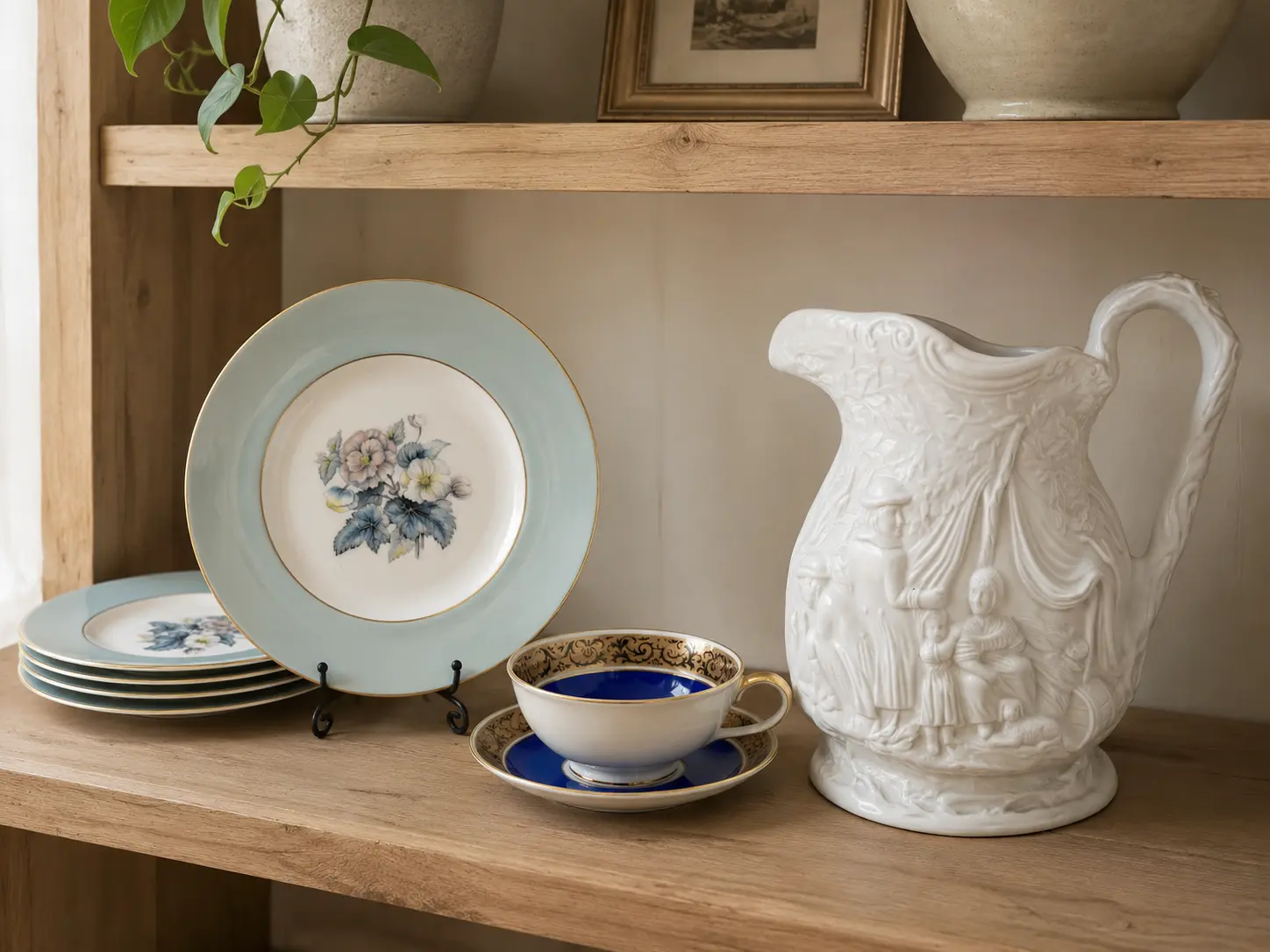
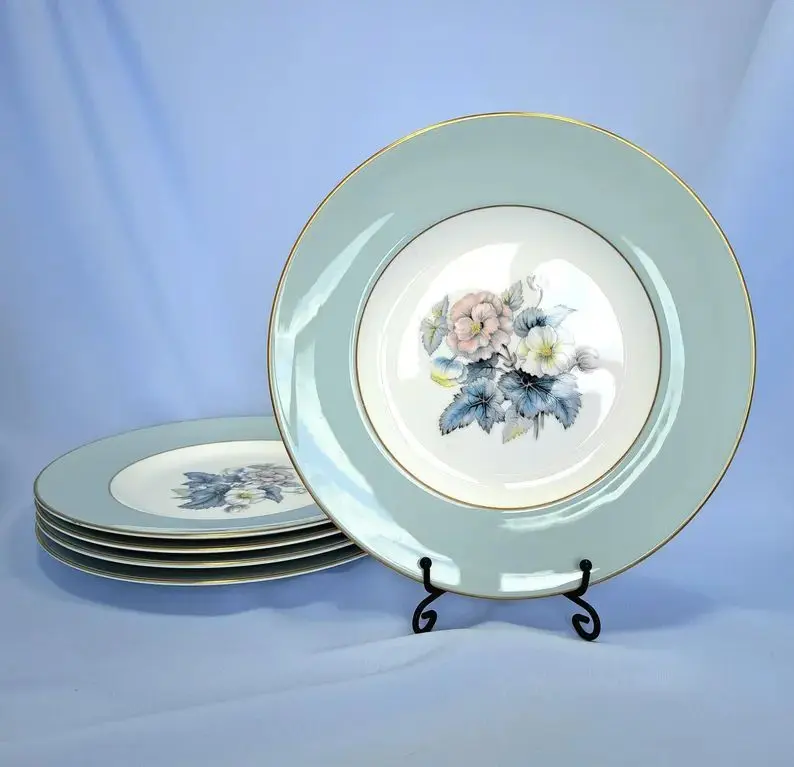
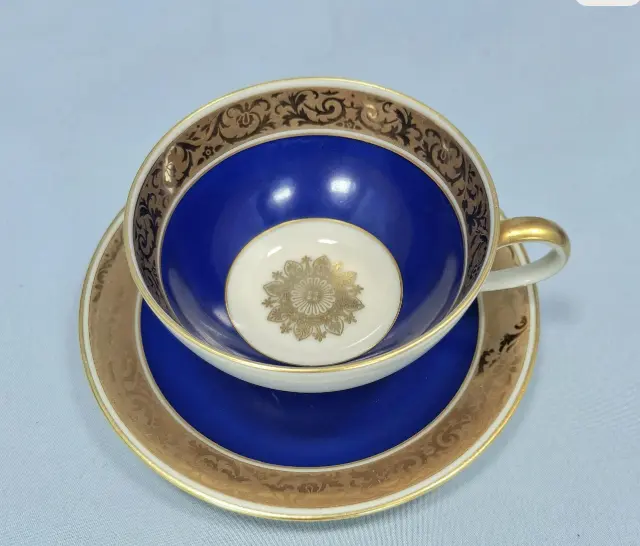
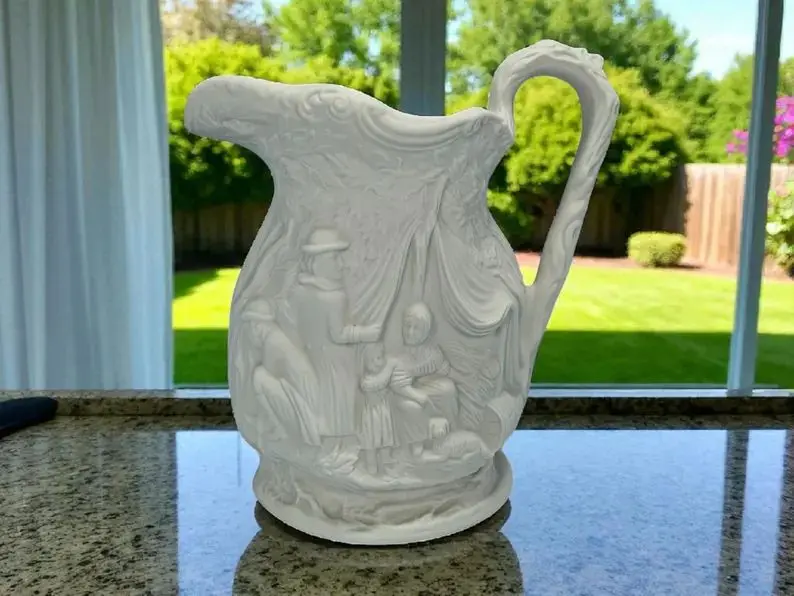
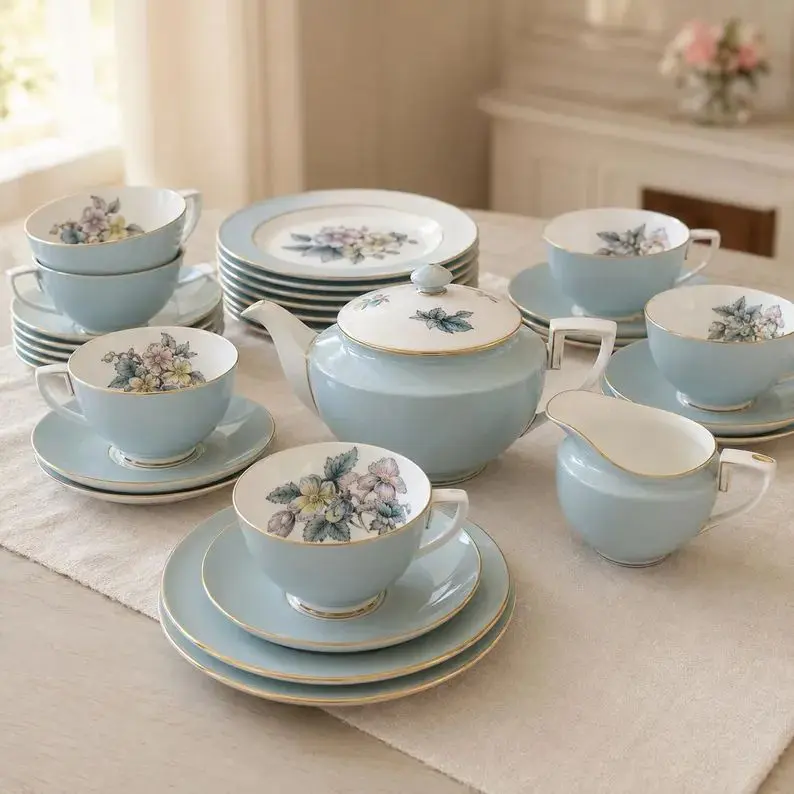
Open shelves are a natural place to display vintage china that has been collected over time. Different patterns can sit comfortably together when they share a similar colour, scale or sense of age. Pale-blue Royal Worcester Woodland plates, a restrained Rosenthal cup and a white Portmeirion jug create variety without making the shelf feel chaotic. The mix brings personality to the kitchen while keeping everyday pieces visible and easy to reach. A little open space between groups prevents the display from becoming crowded and allows the individual shapes and decoration to stand out.
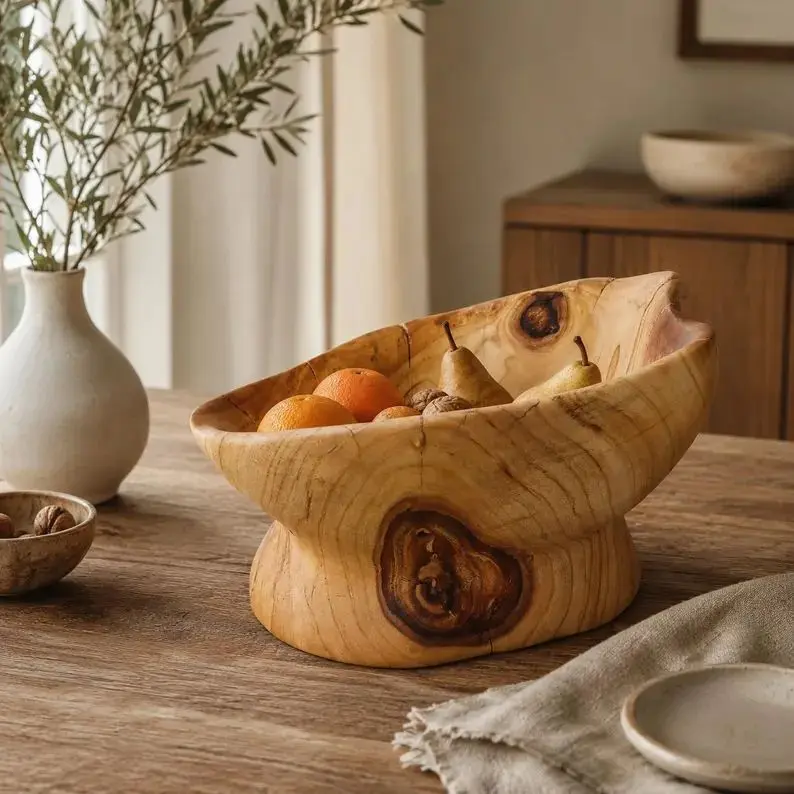
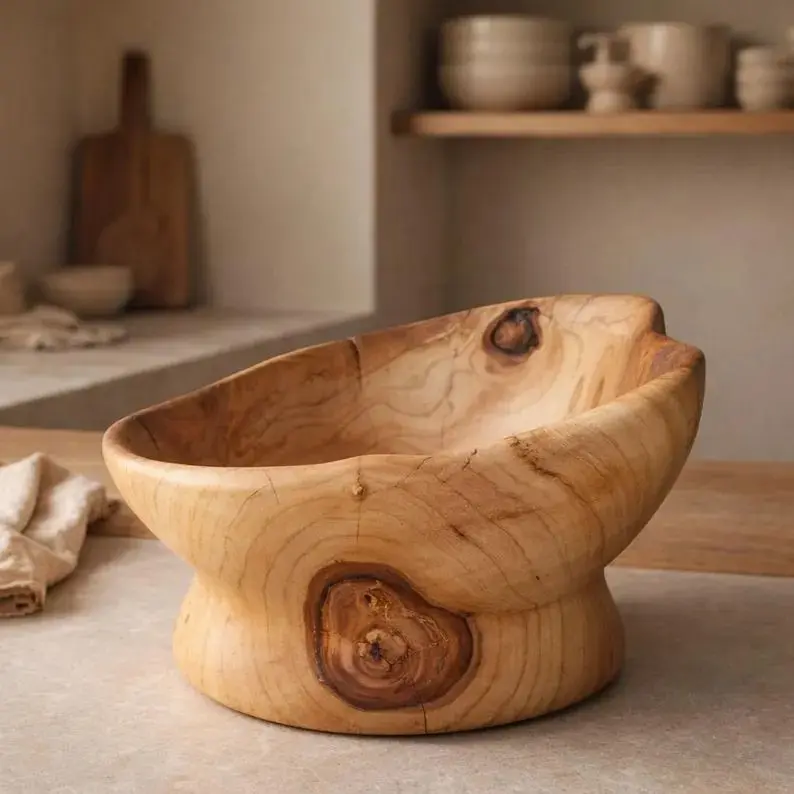
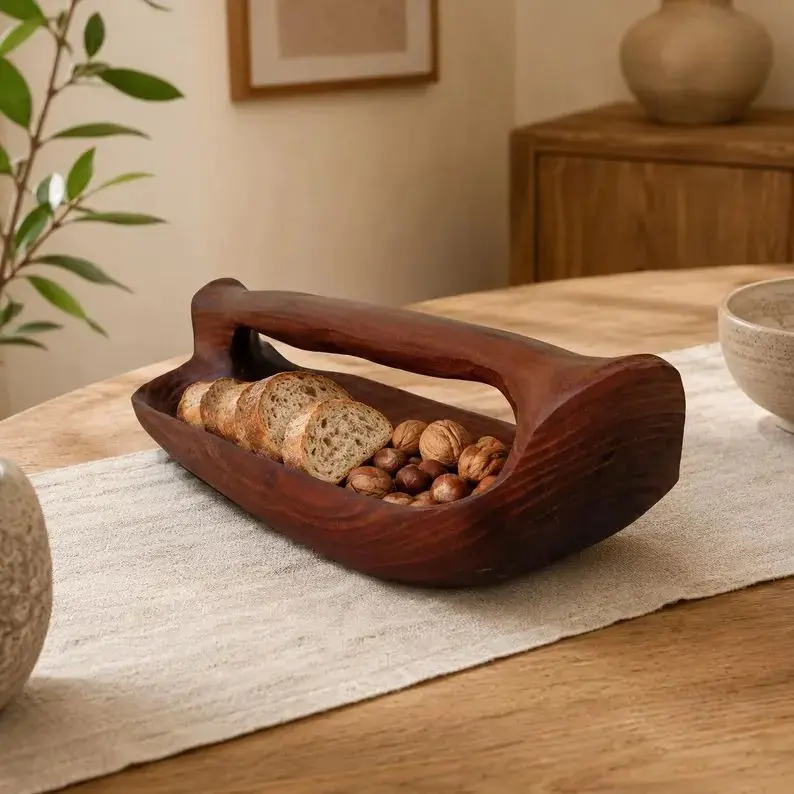
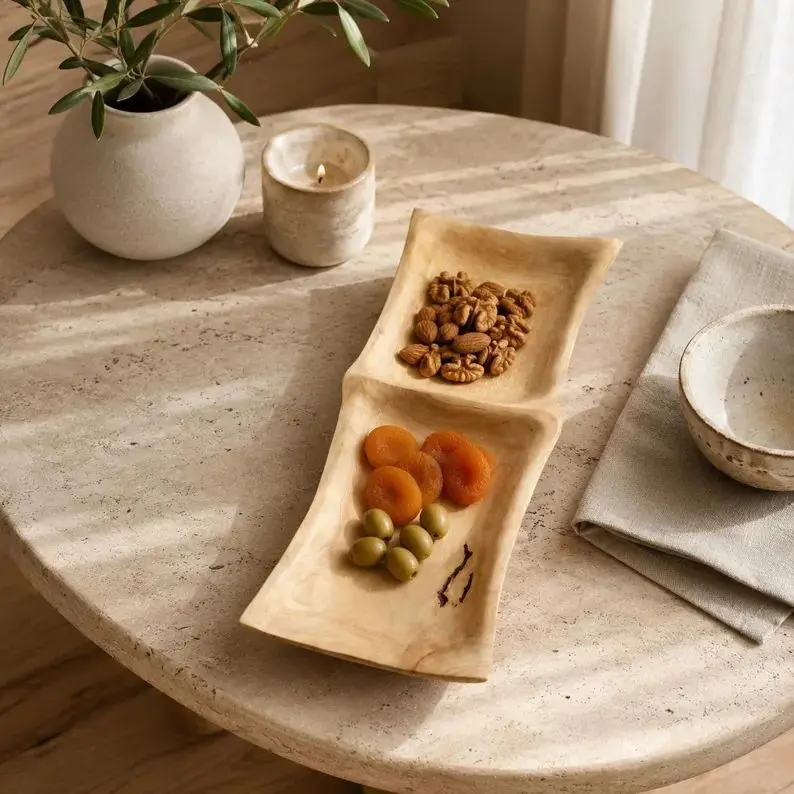
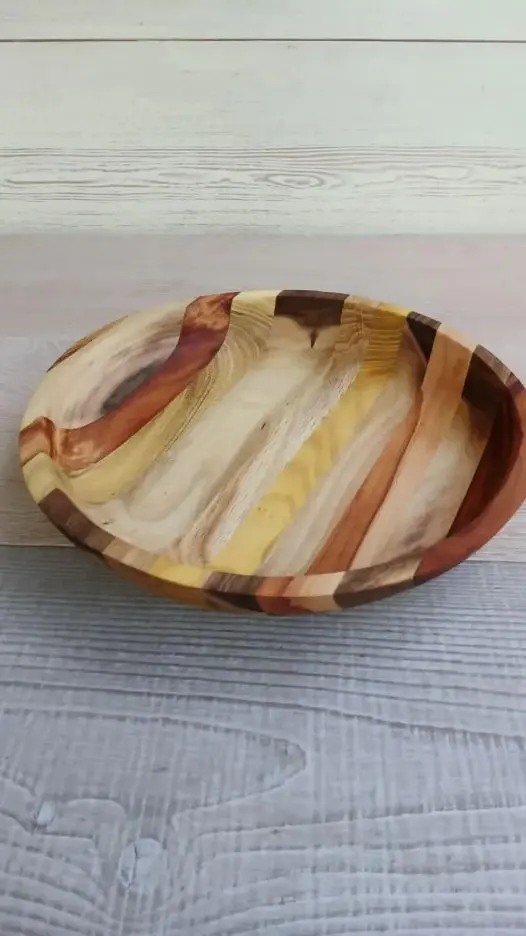
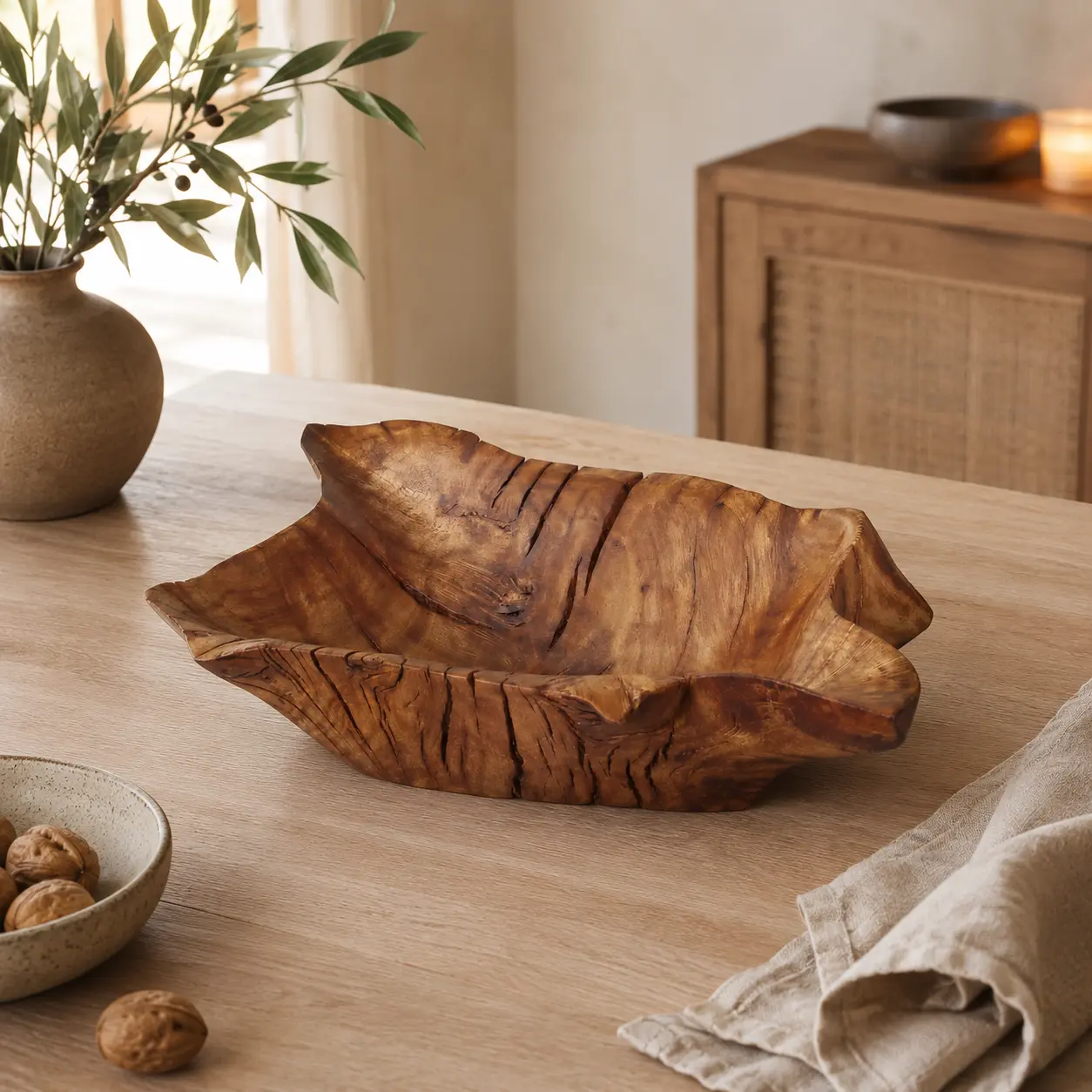
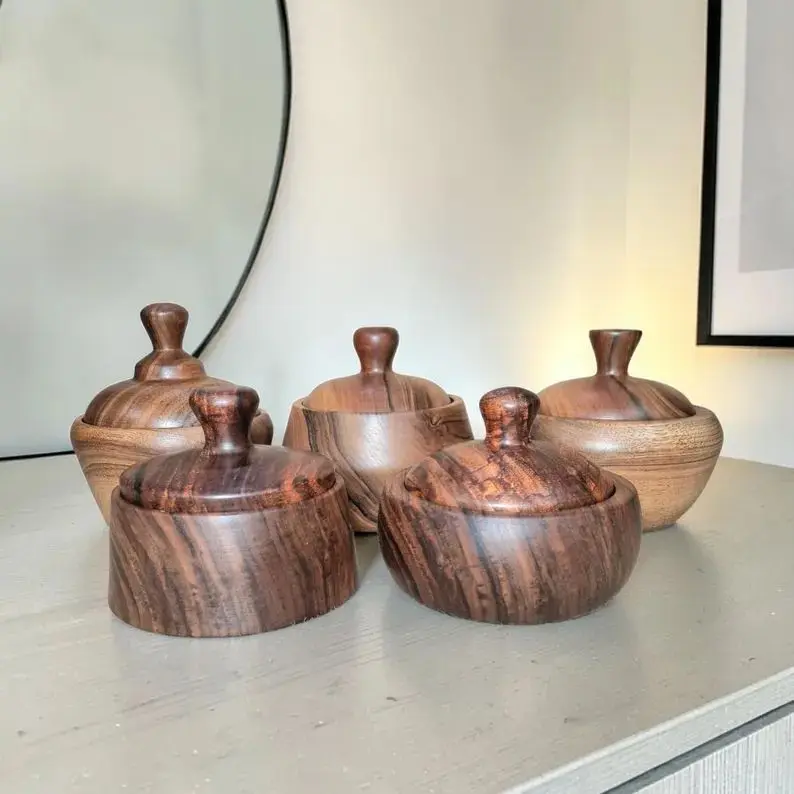
Hand-carved wooden bowls bring warmth and texture to a cottage kitchen while remaining genuinely useful. Every species of wood has its own colour and grain, from the rugged surface of maple burl to the softer tones of pear and Russian olive. Mixing several shapes makes a display feel collected rather than coordinated, especially when the bowls are still used for fruit, bread or serving. Against painted cabinetry, stone or vintage porcelain, their natural variations become more noticeable. Over time, regular use gives the wood an even richer colour and character.
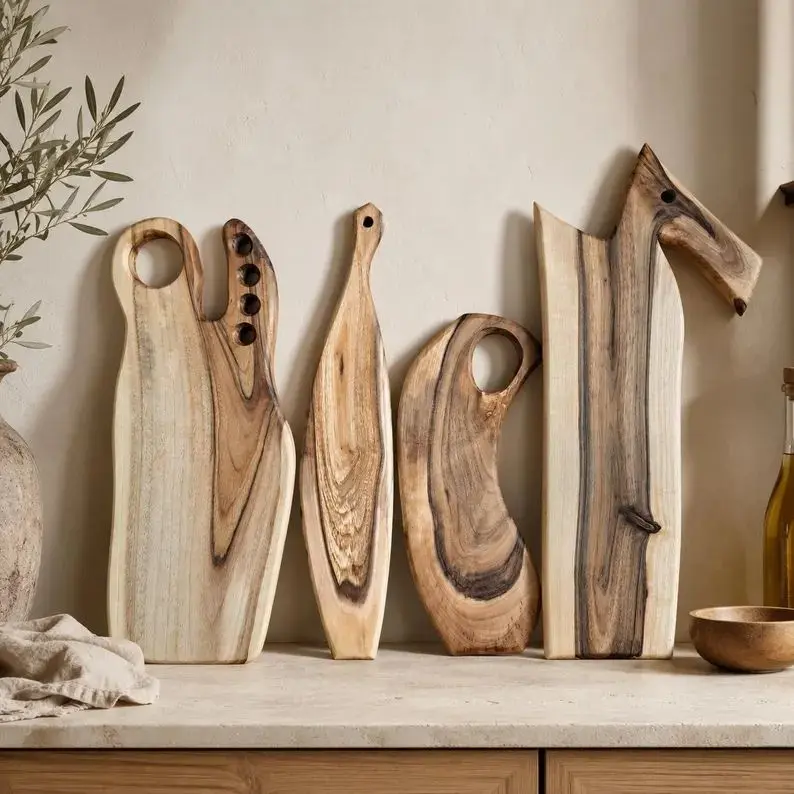
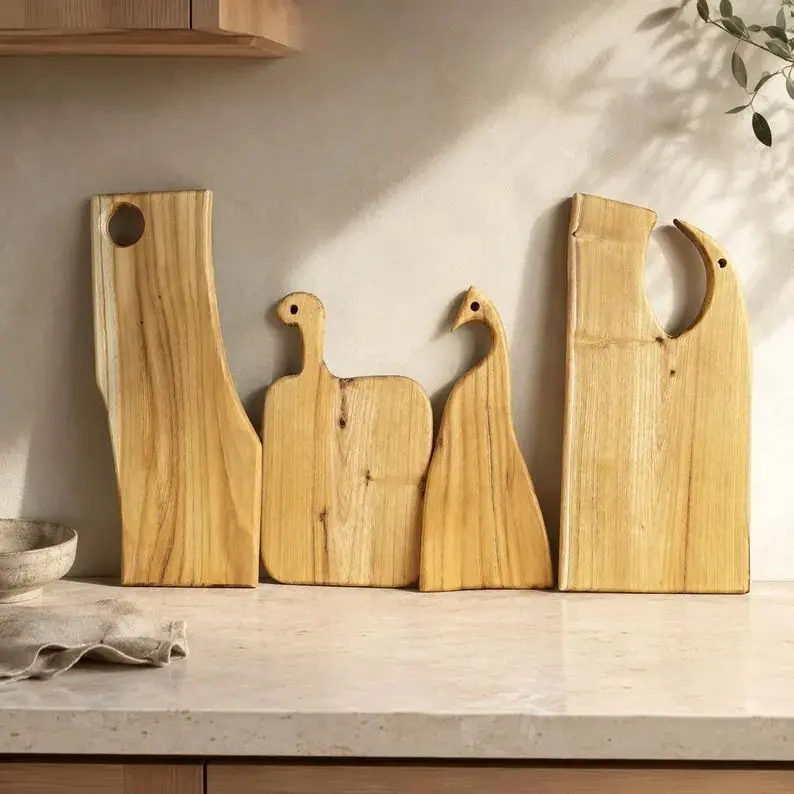
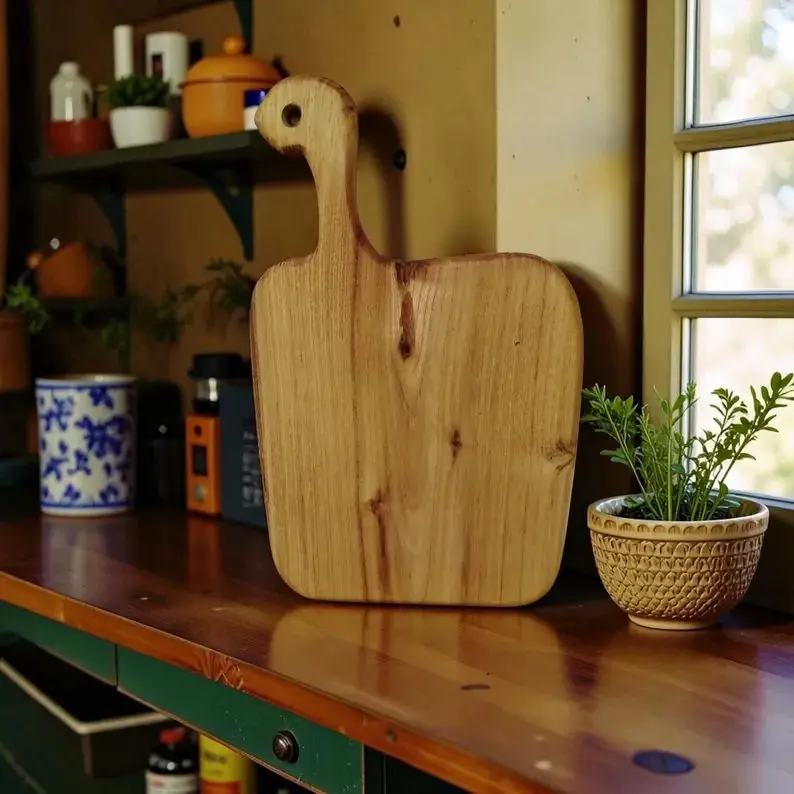
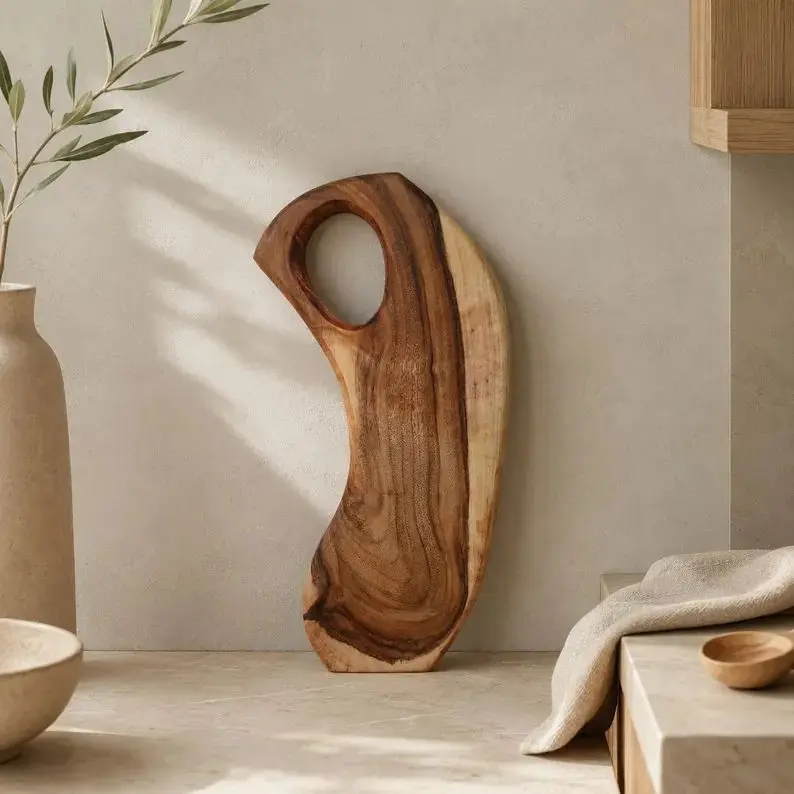
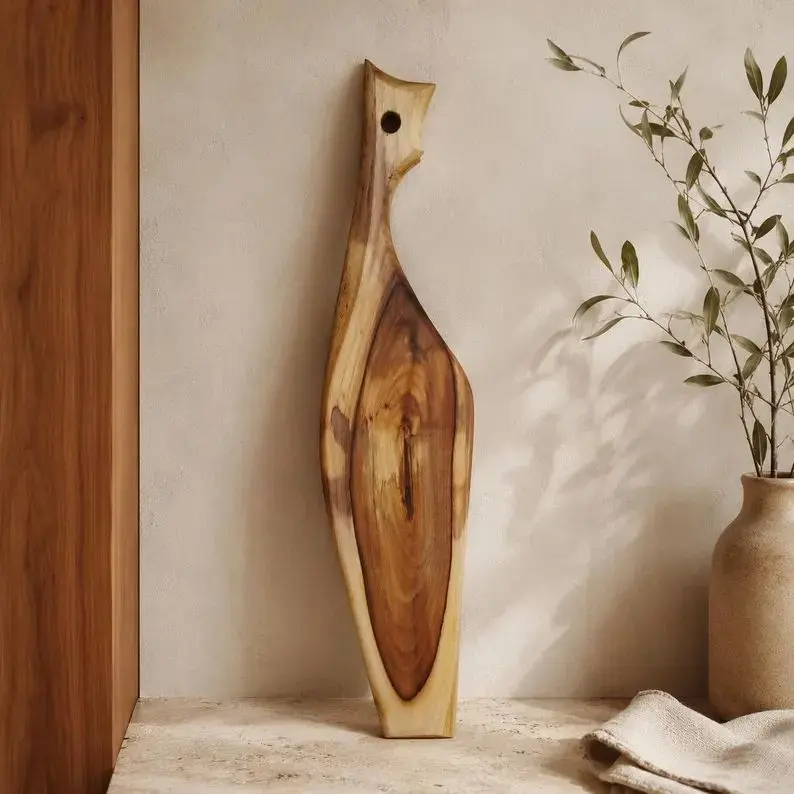
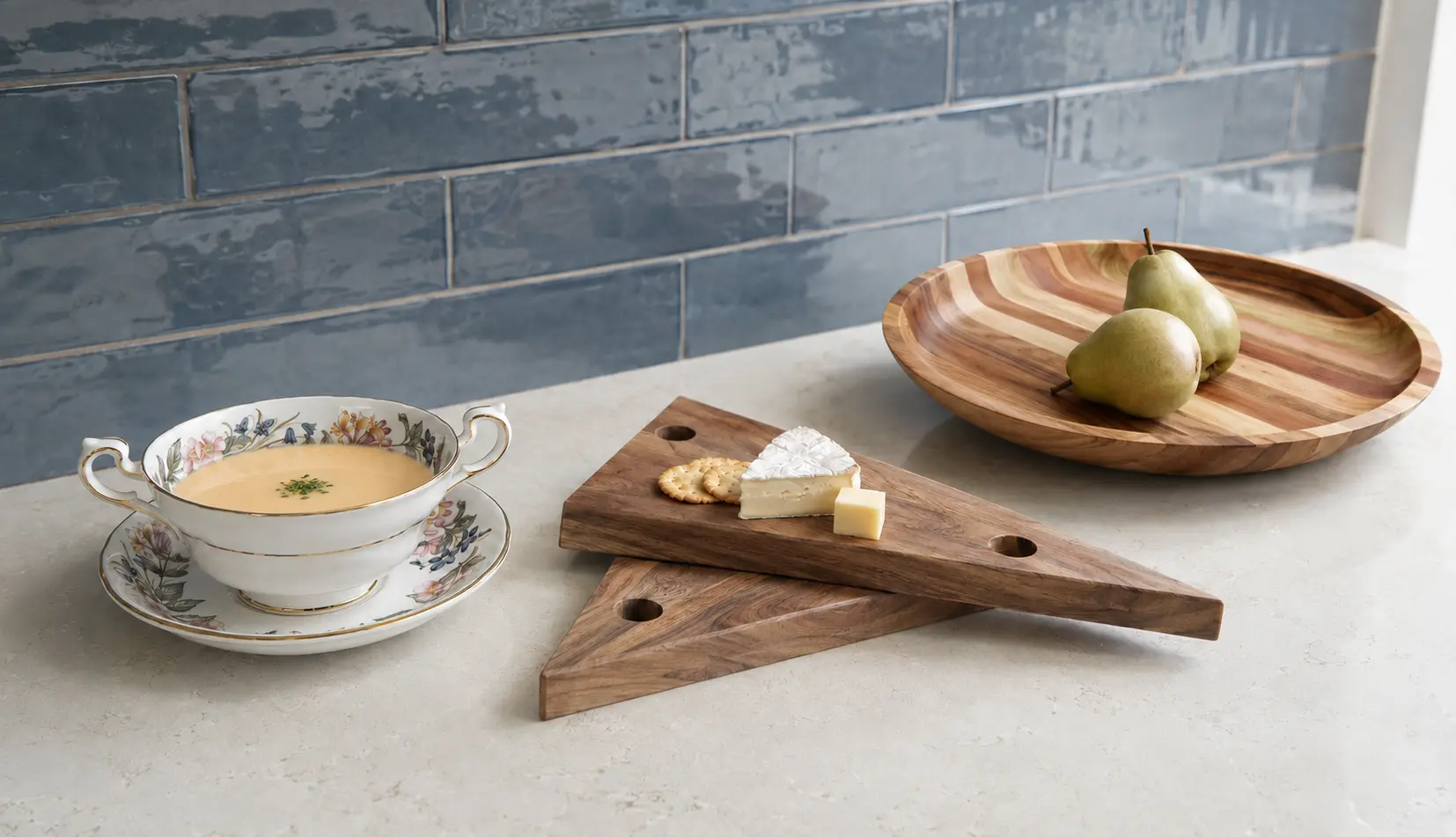
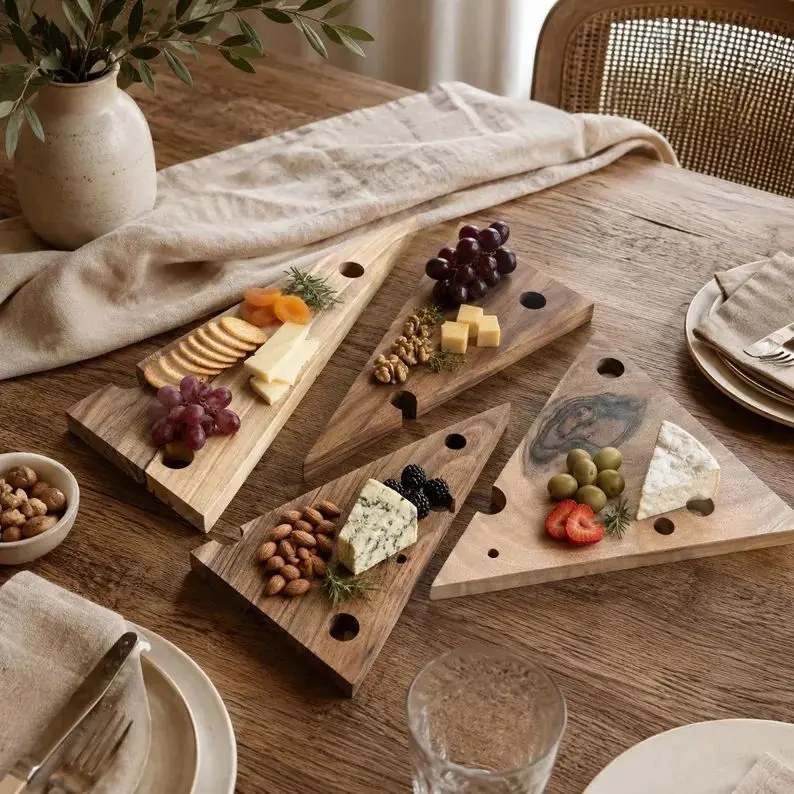
Wooden boards stored against a backsplash add natural warmth without taking up valuable worktop space. A mixture of shapes, handles and wood tones feels more personal than a matching set and reflects the way useful kitchen pieces are often collected gradually. Pear, walnut and live-edge boards each contribute a different grain and outline, turning practical storage into part of the room. Because the boards remain visible and accessible, the arrangement never feels purely decorative. Their worn surfaces and small variations also become part of the kitchen's character.
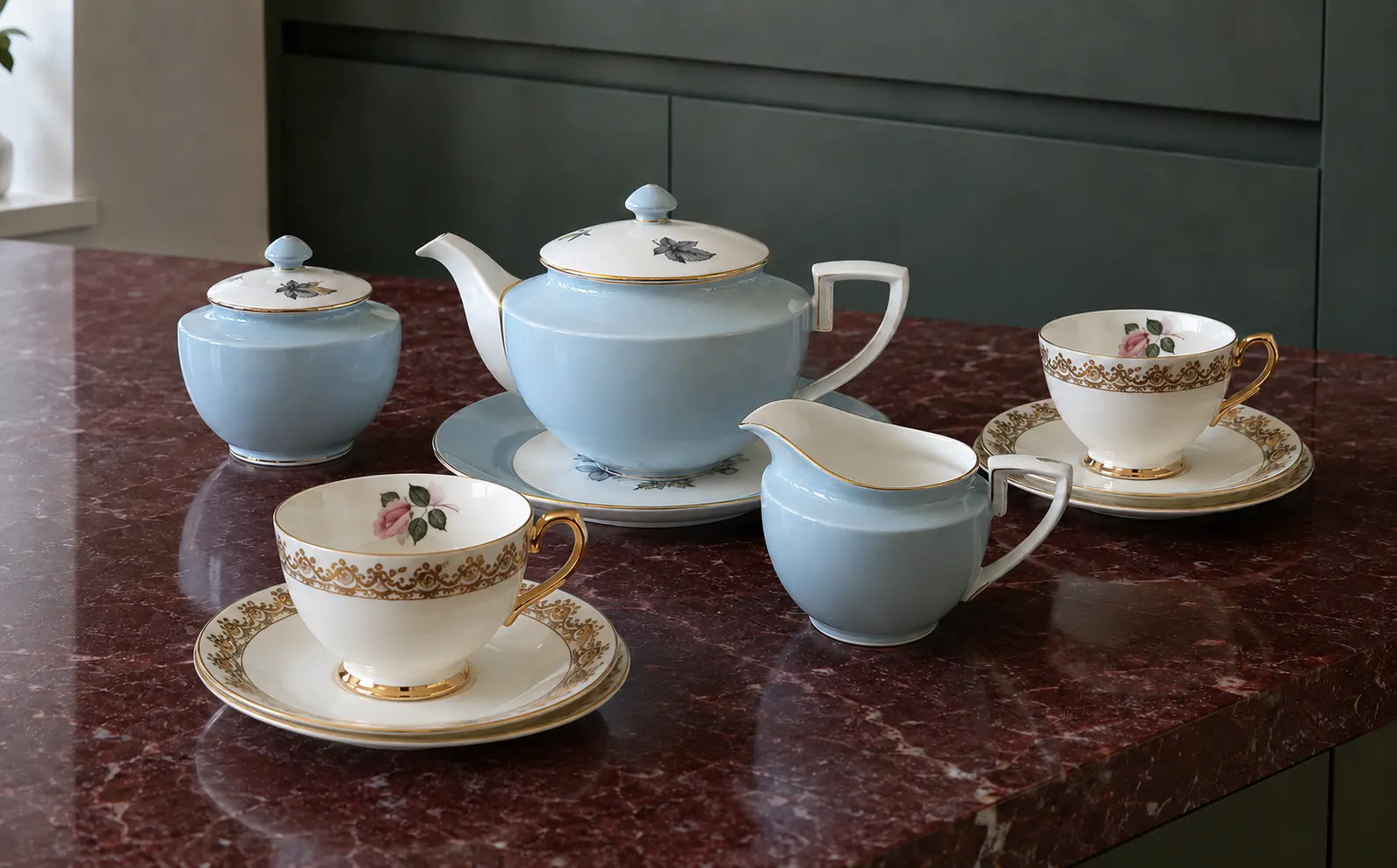
A dedicated tea corner can make an everyday ritual feel more inviting. A teapot, sugar bowl, milk jug and a few favourite cups are enough to give a small area its own purpose without filling it with an entire service. Royal Worcester Woodland china brings a calm, traditional foundation, while Taylor & Kent floral cups add a softer pattern and a touch of colour. Dark painted wood or a richly coloured worktop creates a warm background for pale porcelain. The result feels personal and lived-in because everything on display is also ready to be used.
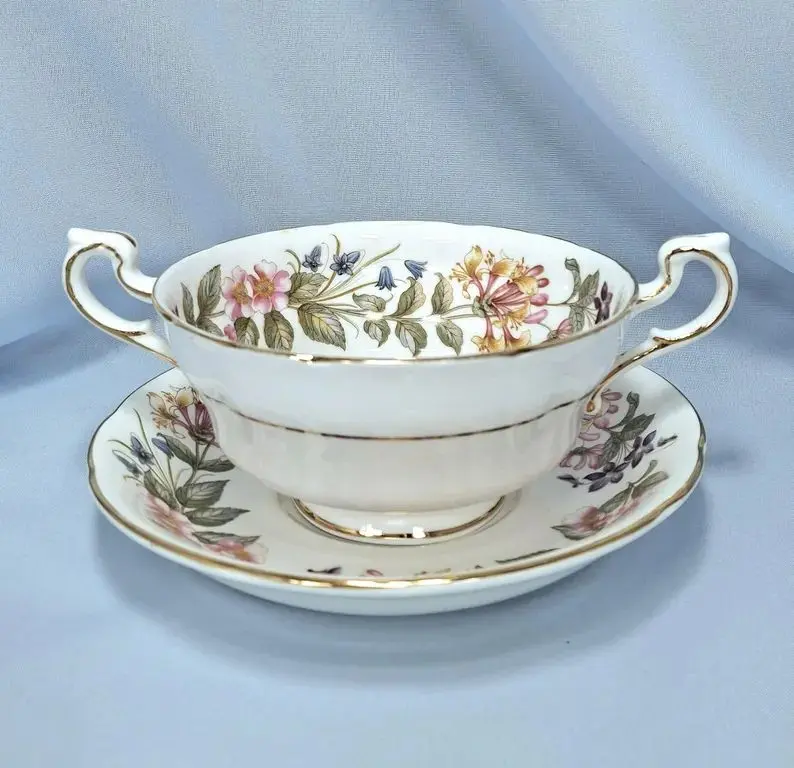
Floral porcelain and natural wood balance one another particularly well. Detailed china can sometimes feel formal, but the warmth and visible grain of handmade wood make it more relaxed and suitable for everyday use. The honeysuckle decoration of Paragon Country Lane porcelain works naturally beside walnut serving boards and a striped wooden bowl because the materials are different without competing for attention. This combination is especially effective in a cottage kitchen, where useful objects often provide most of the decoration. Food, flowers or simple table linens can add softness without overwhelming the patterns and textures already present.
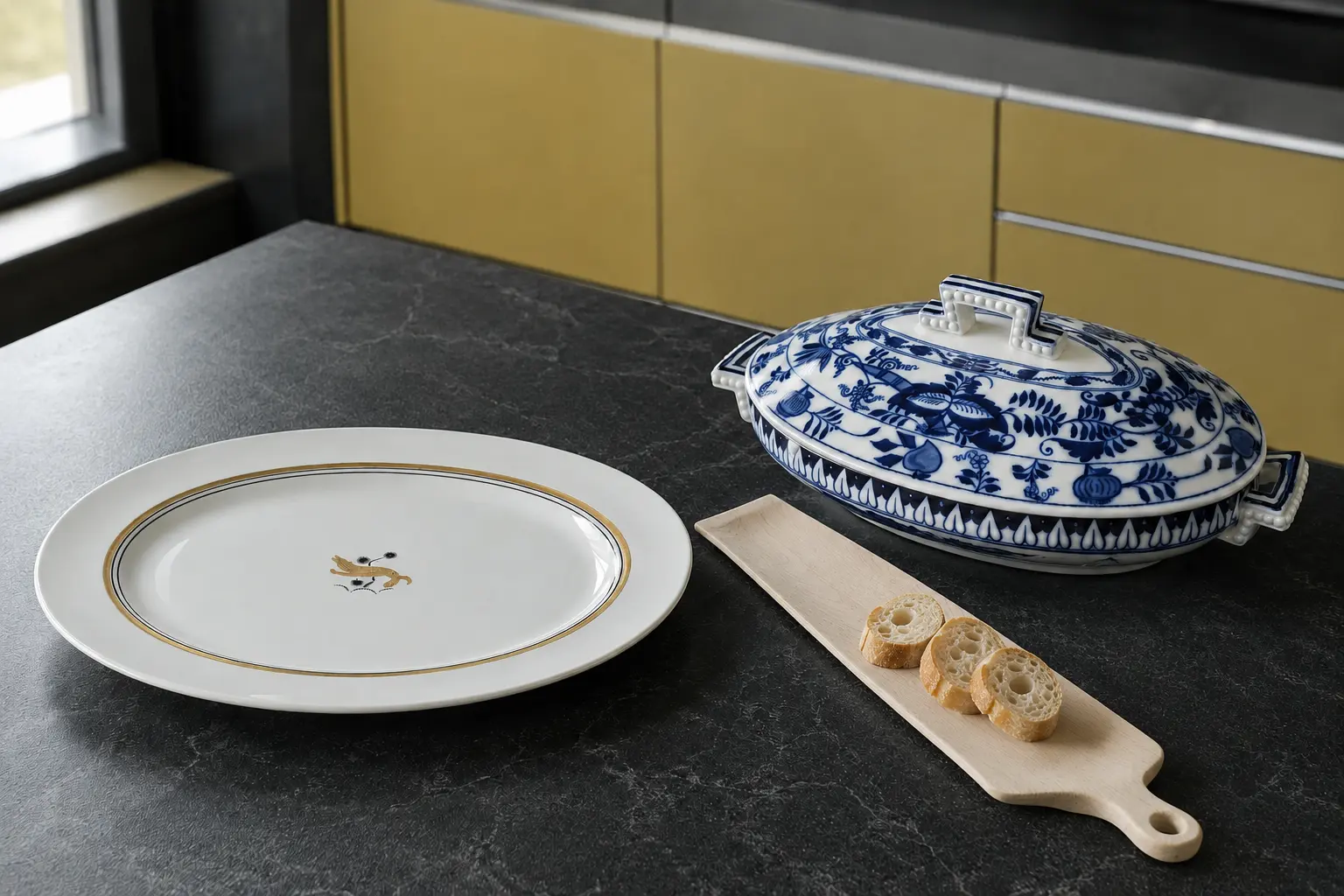
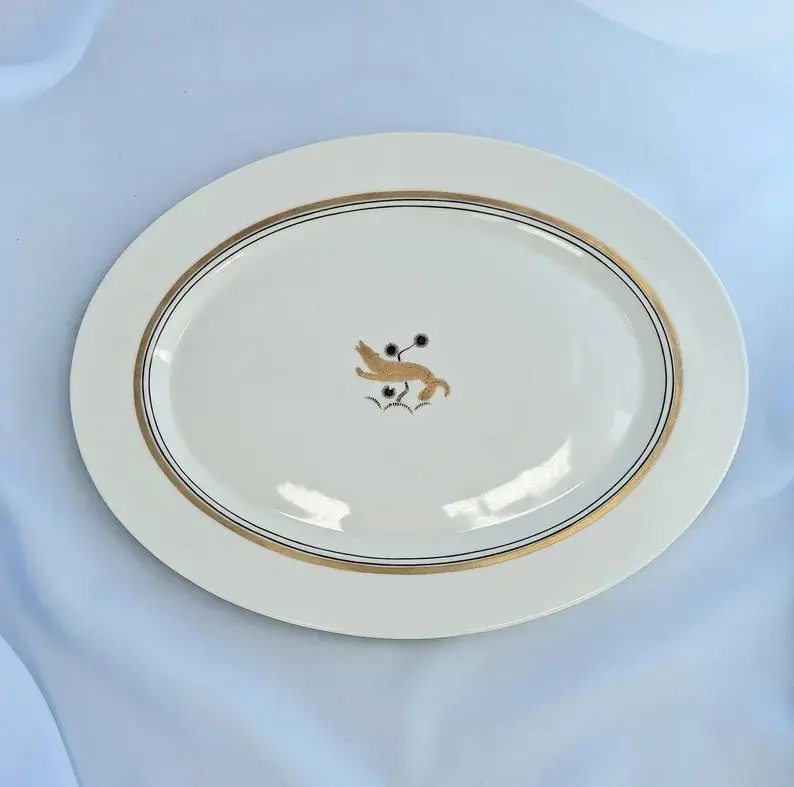
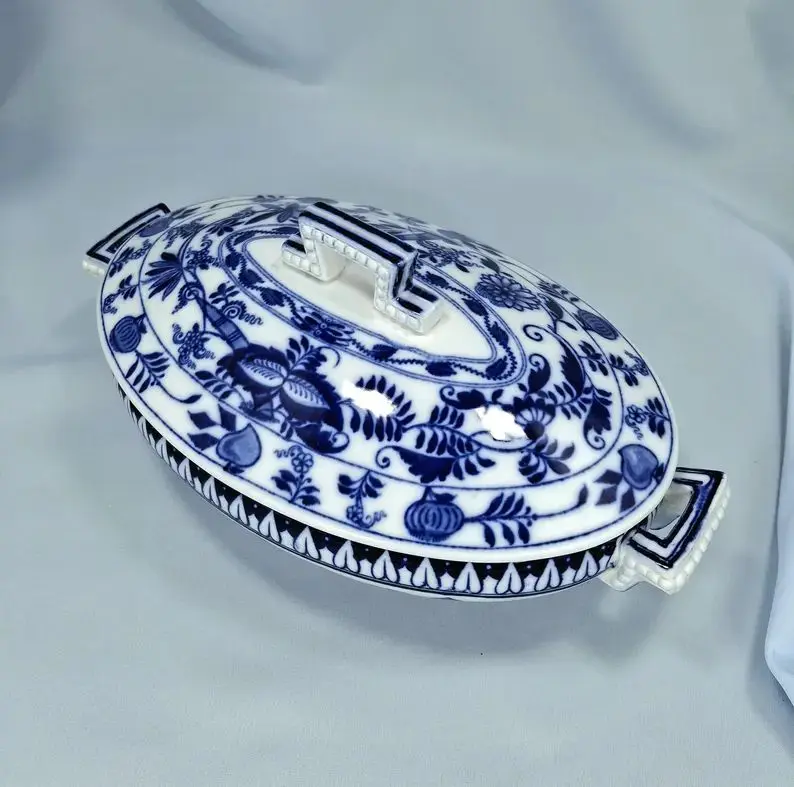
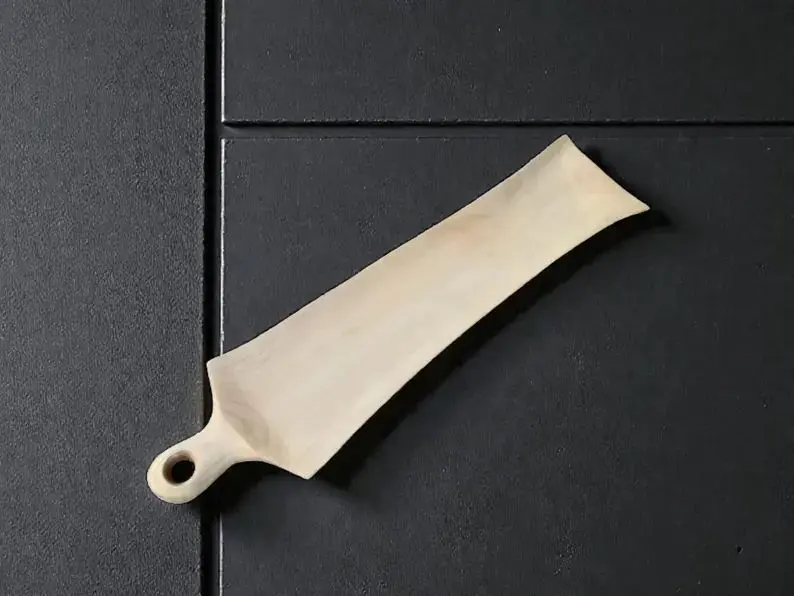
A mixture of serving pieces can give a kitchen the feeling that it has evolved naturally over time. A long walnut-and-maple board brings warmth to blue-and-white porcelain, while the rounded forms of a lidded tureen and an oval serving dish soften its straight lines. Together, the pieces feel practical rather than ceremonial: the board can carry bread or cheese, and the porcelain can return to the table whenever it is needed. A little space around these larger objects keeps the counter calm and allows their shapes, materials and decoration to remain distinct.
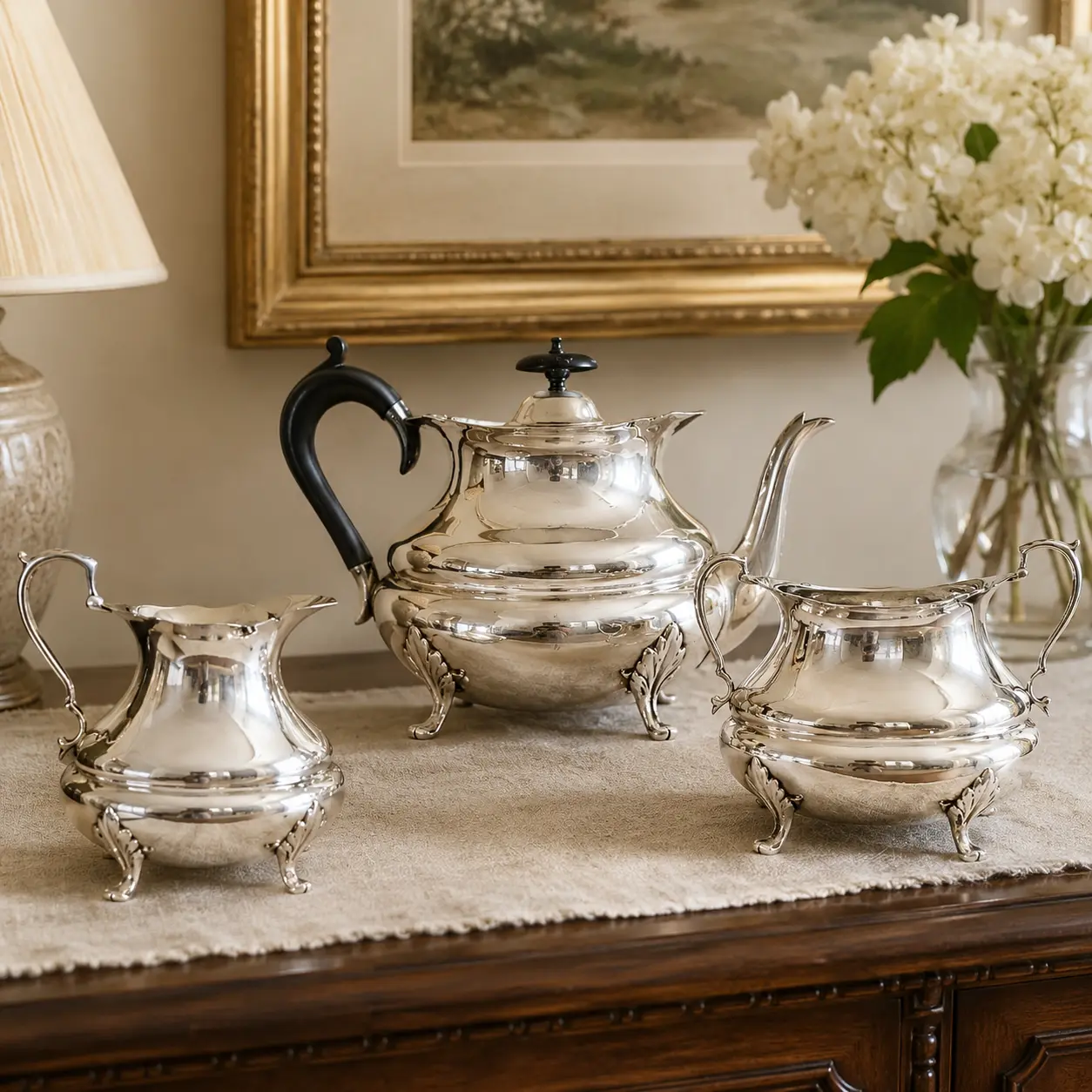
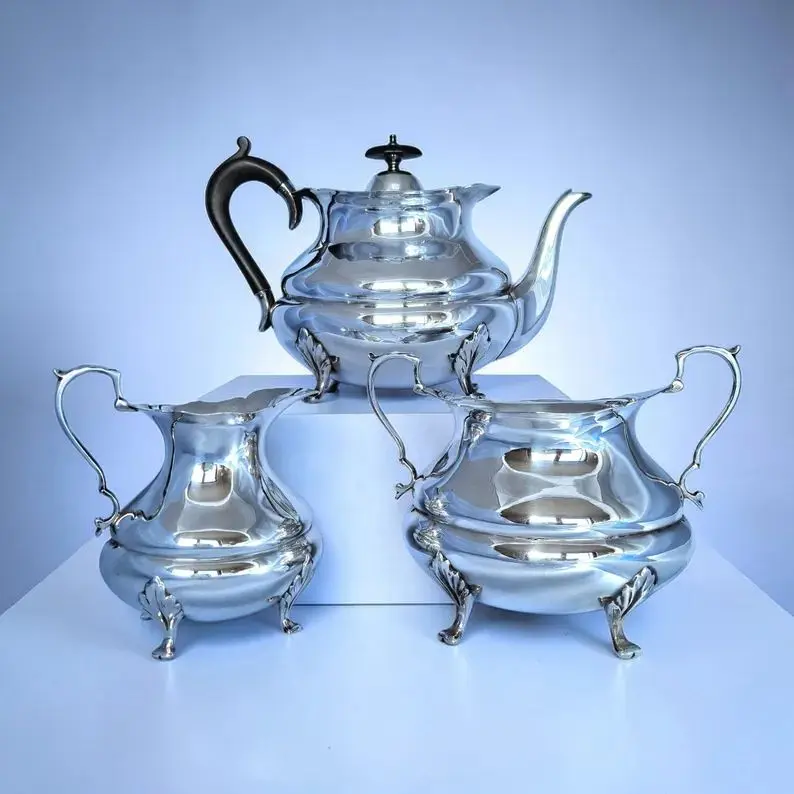
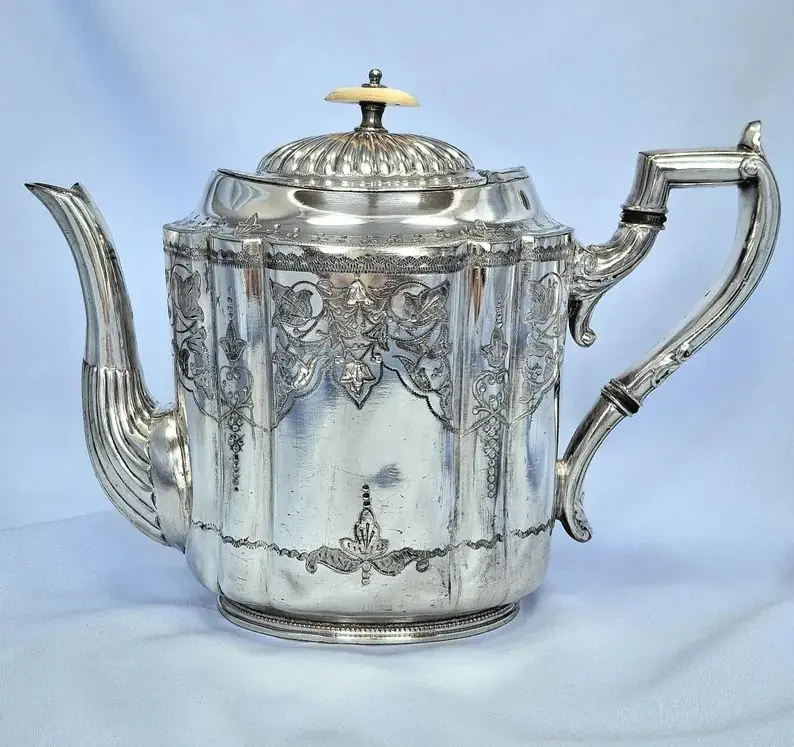
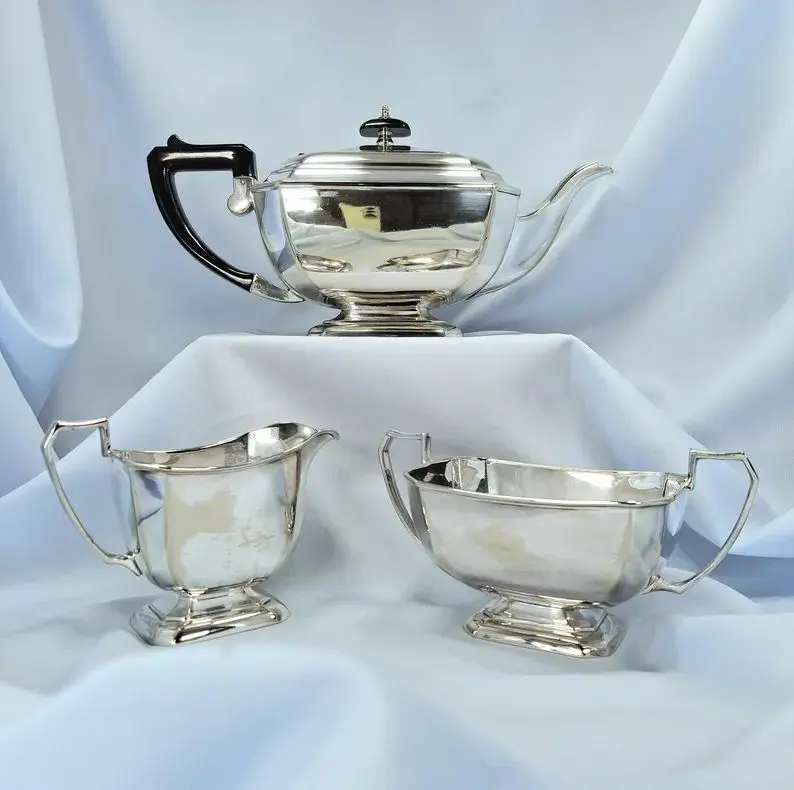
A complete silver-plated tea set can bring history and quiet elegance to a kitchen or dining area. The teapot, sugar bowl and creamer already belong together, so they create a coherent display without needing much additional decoration. Dark wood complements the warmth of aged silver, while soft reflections reveal the different shapes, handles and details of each piece. A highly polished finish is not essential; gentle patina can make antique silver feel more comfortable in an informal home. Kept within easy reach, the set remains part of everyday life rather than something hidden away for special occasions.
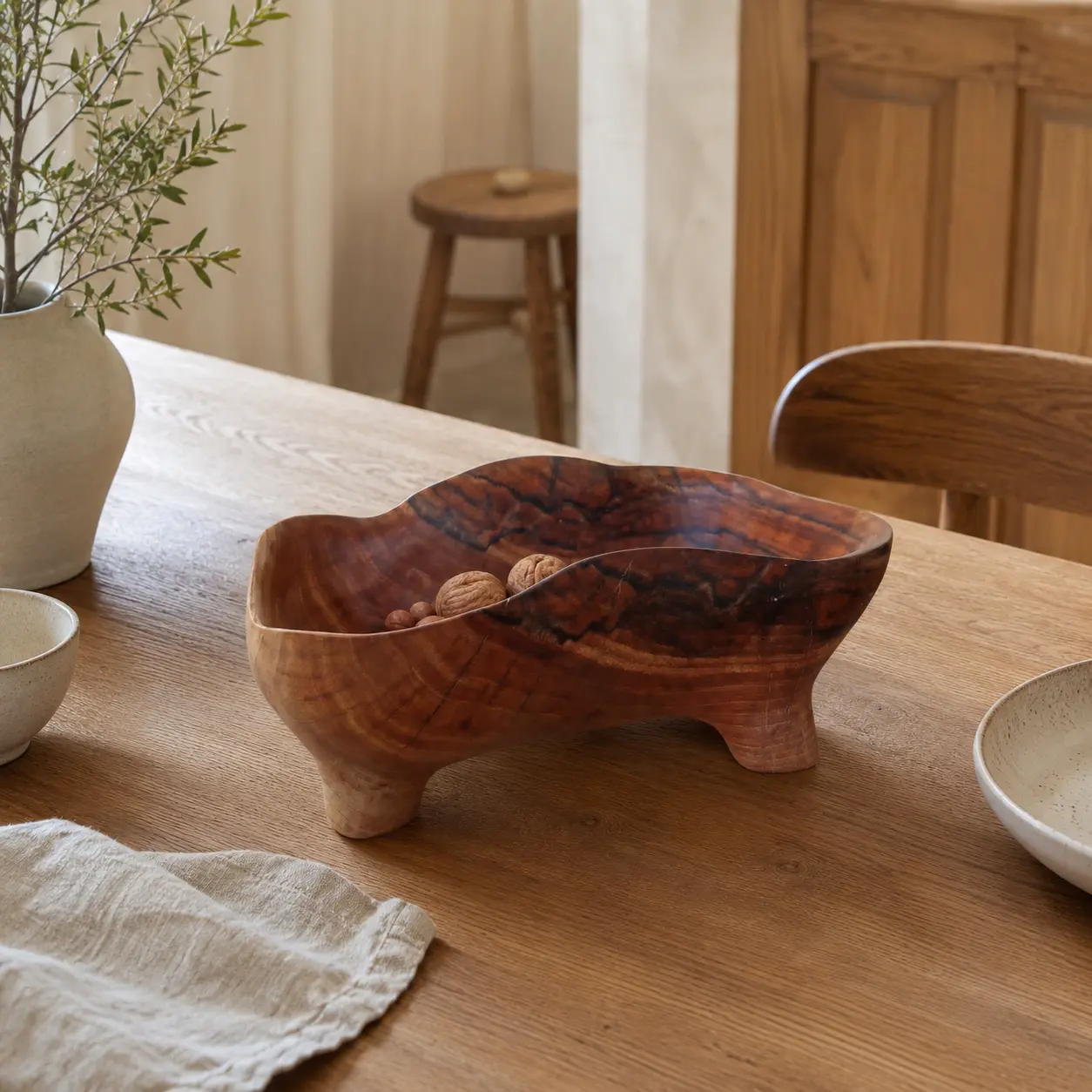
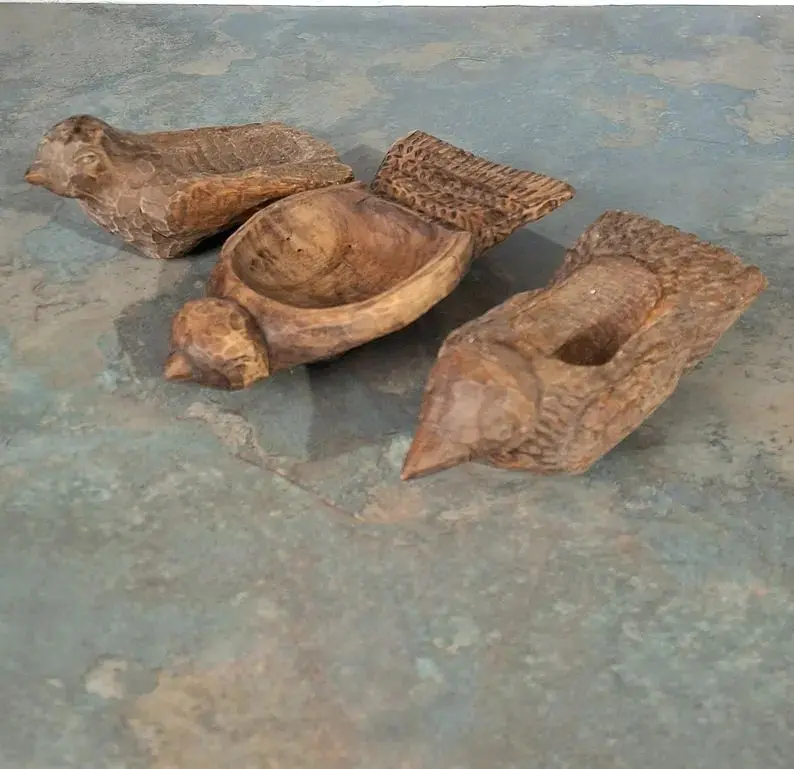
A sculptural wooden object can give a kitchen a strong focal point without adding unnecessary decoration. Natural grain, an unusual base, a carved opening or an irregular edge can make even a useful bowl feel like a small work of art. Pieces that combine form and function are particularly suited to a cottage interior because they never feel detached from everyday life. A wooden bowl with an integrated bud vase, for example, can hold small items while bringing height, texture and a simple natural accent to the room.
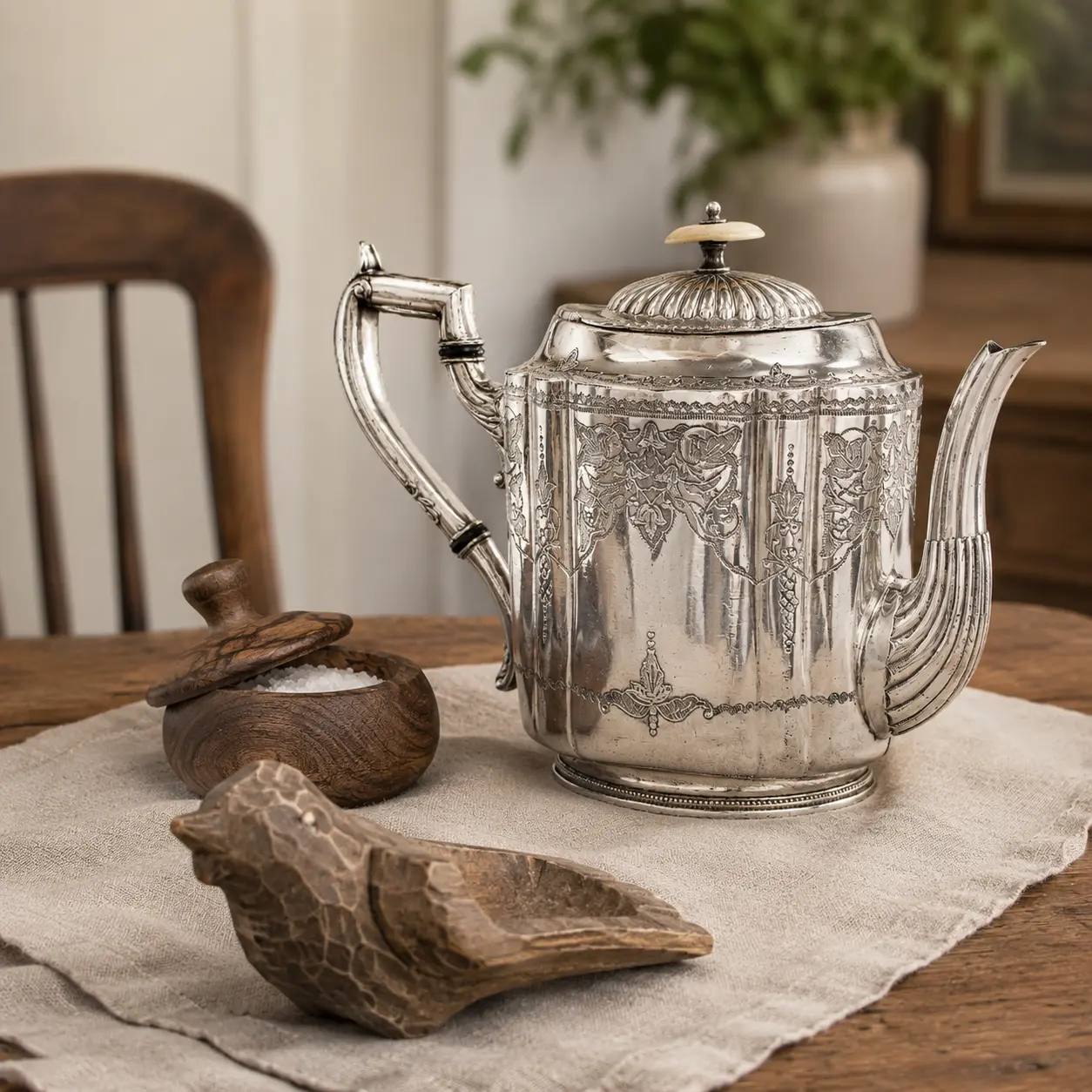
Silver-plated pieces feel less formal when they are paired with rustic wood. The cool reflections and aged surface of an antique teapot contrast with warm grain and hand-carved details, allowing both materials to appear richer. A Mark Willis & Son teapot beside mulberry wood salt cellars creates this balance without requiring a large collection of objects. The combination suits a cottage kitchen because it brings together refinement and craftsmanship while keeping both pieces useful. Small scratches, patina and variations in the wood reinforce the sense that these objects have been made and used rather than chosen simply as decoration.
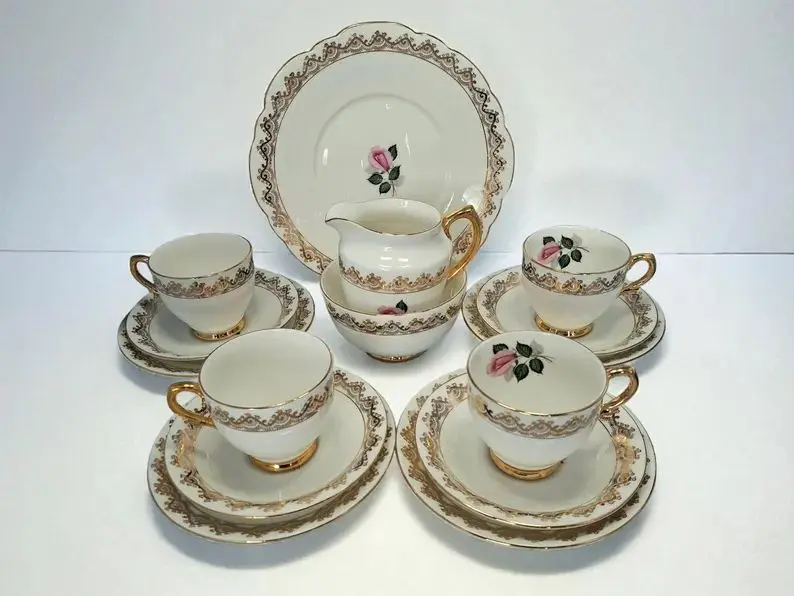
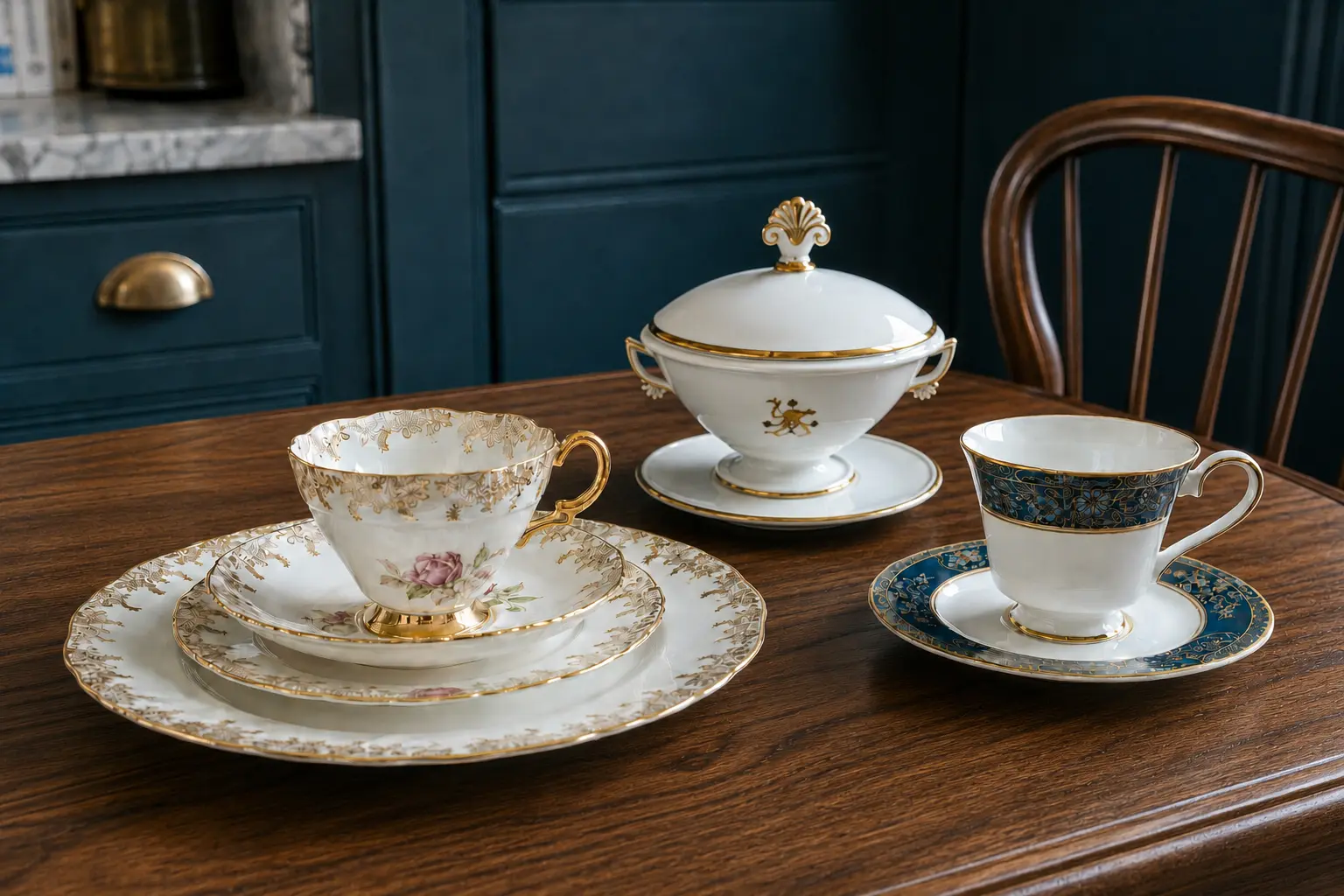
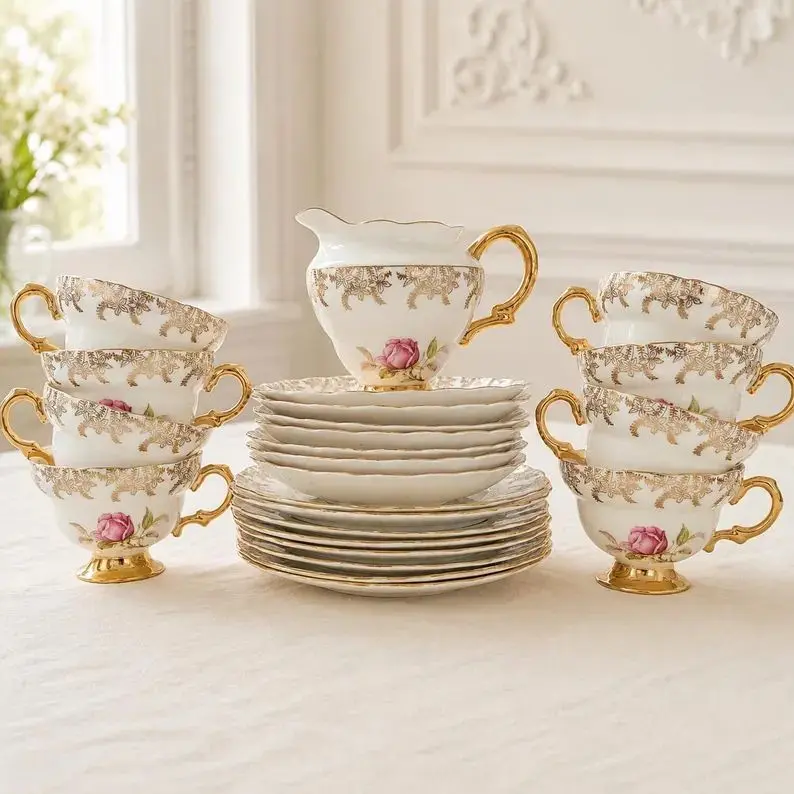
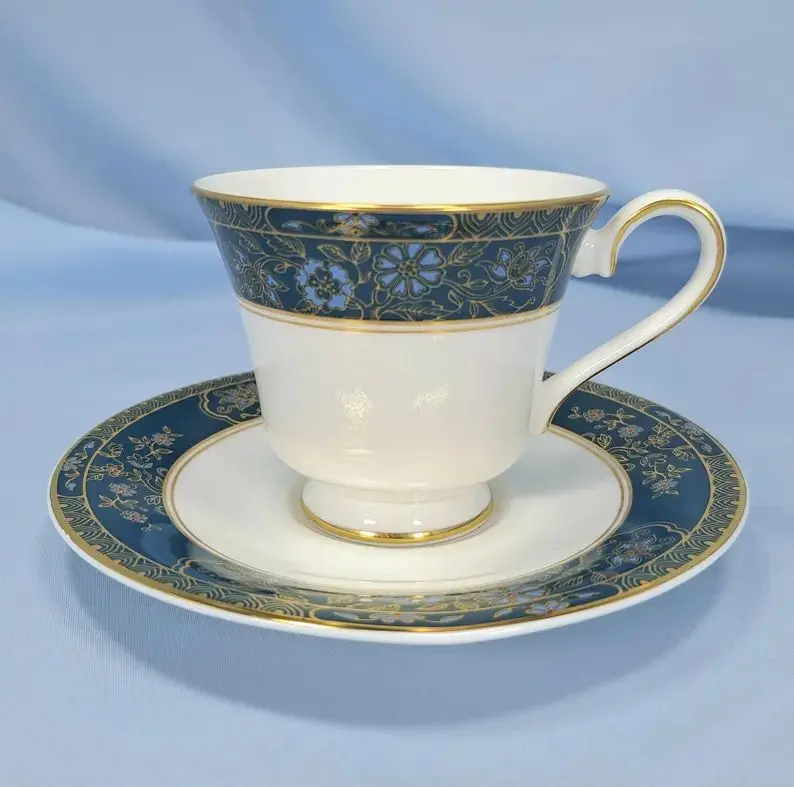
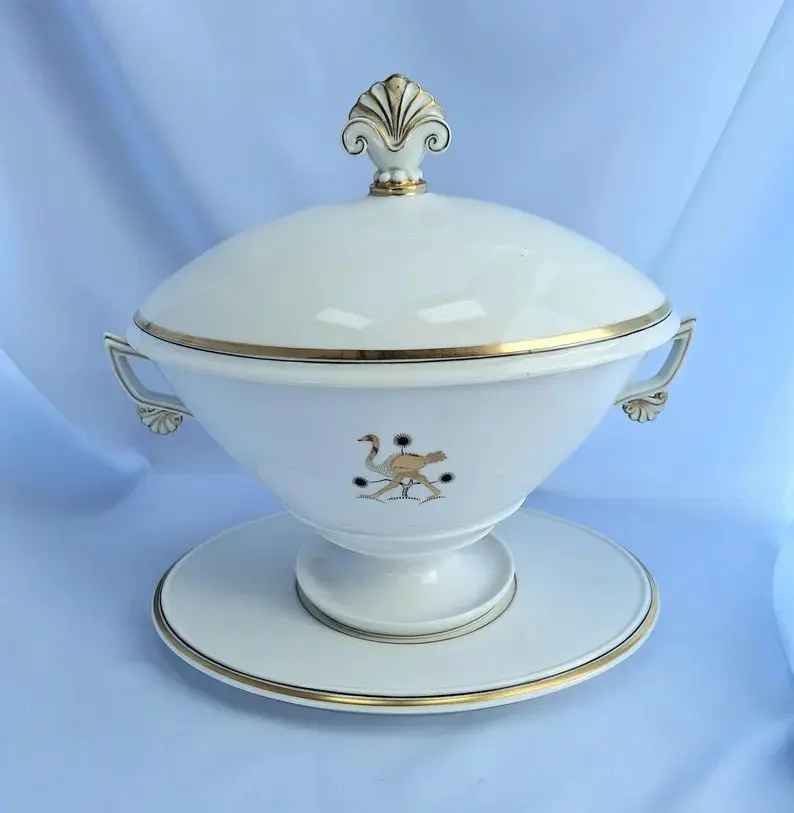
A collected table setting gains character from pieces made by different potteries and in different periods. They do not need to match exactly: a recurring floral colour, a fine gold line or a similar scale can provide enough connection. Rosina rose china, a Royal Doulton Carlyle cup and a small Royal Copenhagen tureen each retain their own identity while still feeling at home on the same table. Warm wood helps unite the different patterns and keeps the setting informal. The result suggests a collection built gradually from pieces that were individually chosen and enjoyed.
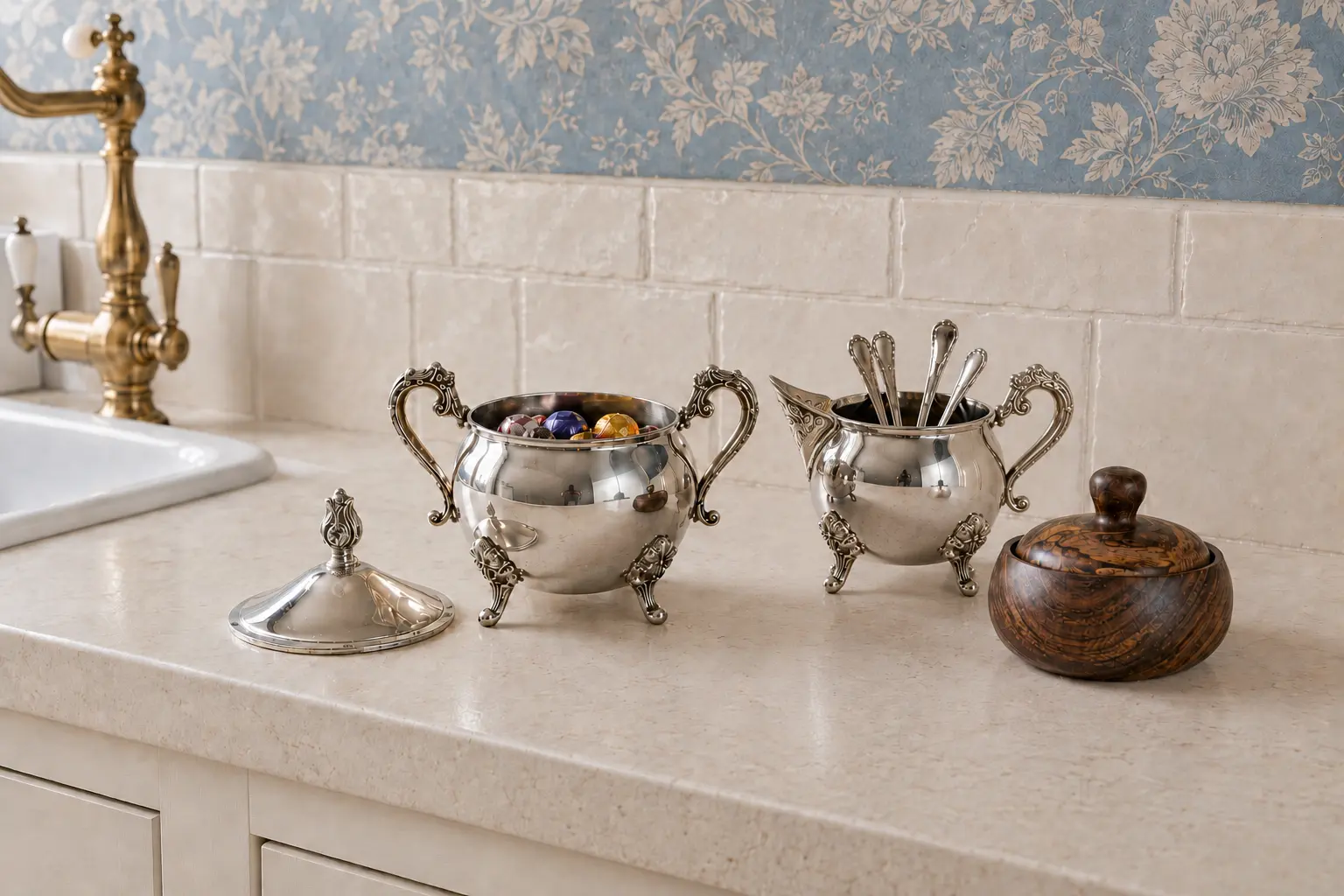
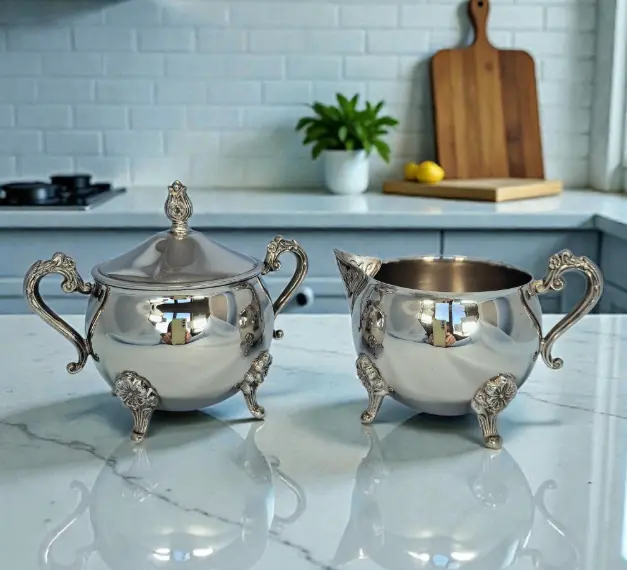
Some of the most convincing kitchen displays are made from objects that already serve a purpose. Wooden jars provide storage, while an antique sugar bowl and creamer can remain useful for serving or holding small kitchen essentials. Their different materials bring warmth, texture and a touch of reflection to an otherwise simple surface. Because the objects are handled regularly, the arrangement changes naturally instead of remaining frozen like a staged display. This combination of usefulness and character is central to a cottage kitchen, where practical possessions often become the most personal form of decoration.
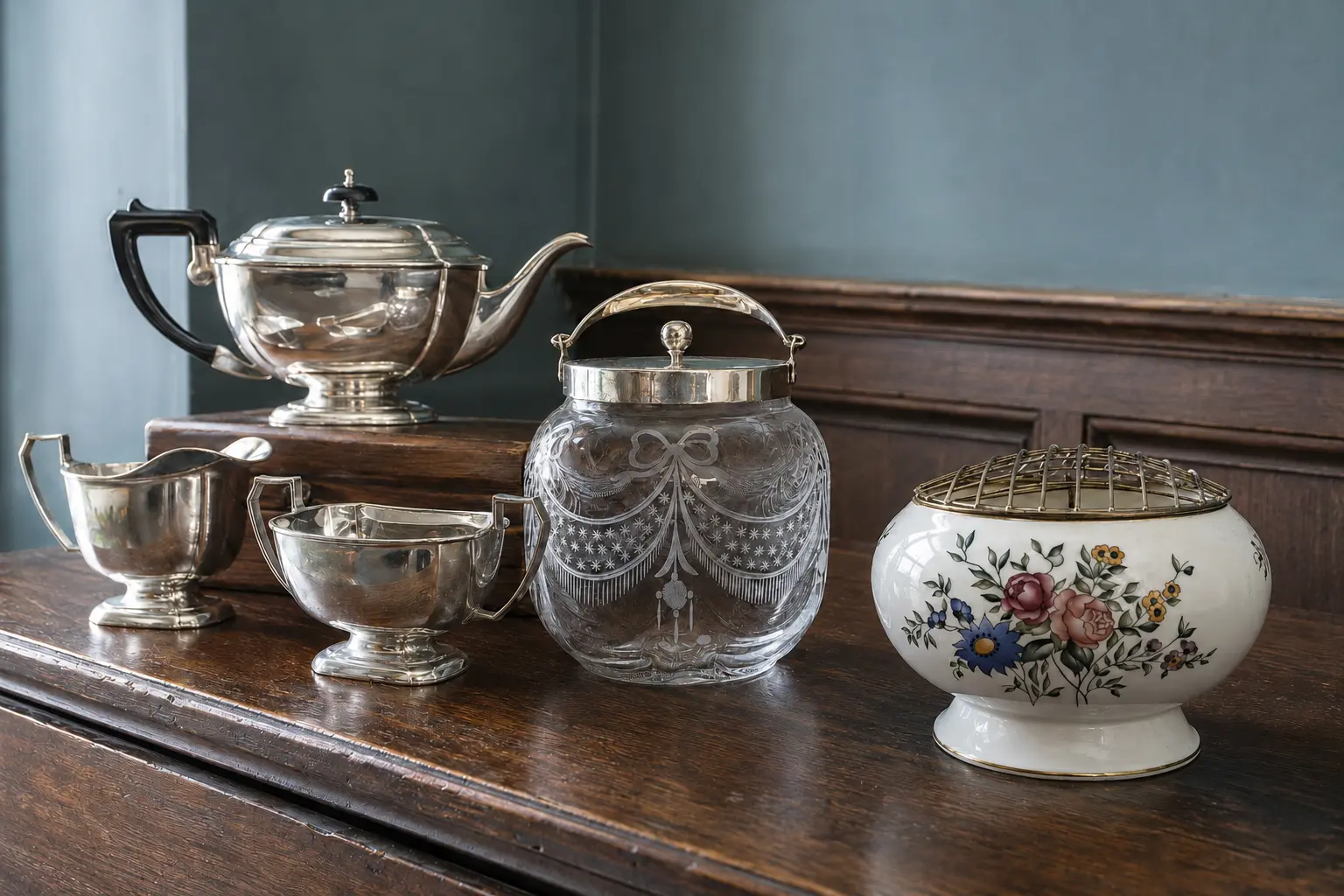
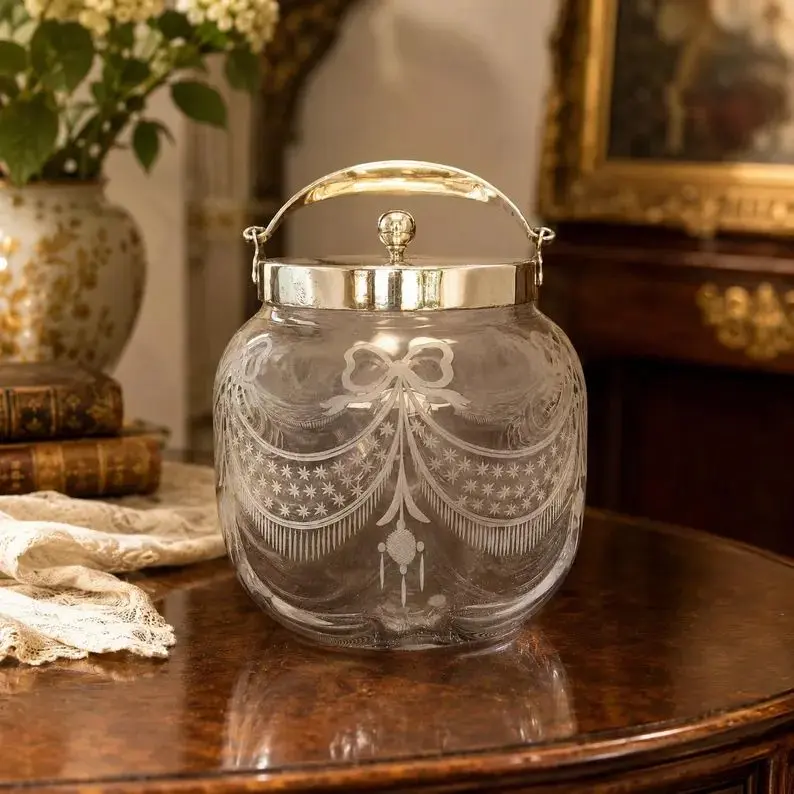
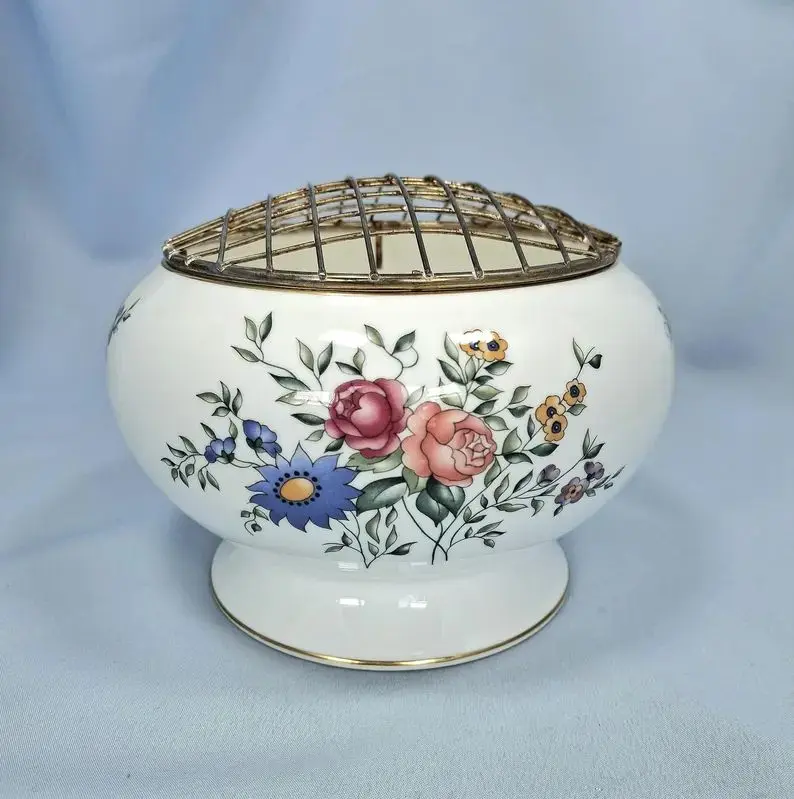
Cottage kitchens become more convincing through the natural signs of use that develop over time. Silver plate softens and darkens, etched glass catches small variations in the light, wood gains deeper colour, and old china carries traces of careful handling. A vintage silver tea set, an etched glass biscuit barrel and a Wedgwood Avebury rose bowl show how different materials can age gracefully without appearing neglected. Minor irregularities are part of their history, provided the pieces remain sound and useful. This authentic character has far more depth than an artificially distressed finish or a generic imitation of vintage style.
A cottage kitchen does not need to be completed all at once. Begin with one useful piece you genuinely like, then add objects that share a colour, material or sense of age. Explore vintage china for daily tea rituals, practical wooden pieces for a new home, or browse the full collection to find something with its own history and character.